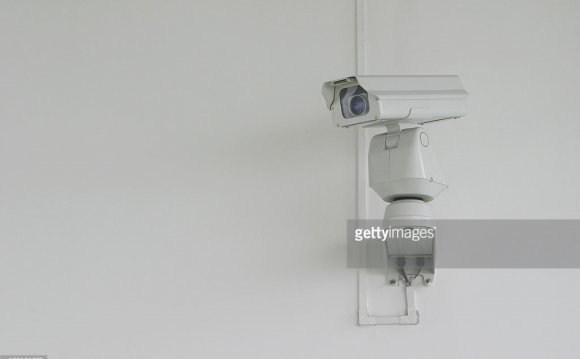
PTZ (aka Pan / Tilt / Zoom) cameras are capable rotating their lens so that they can capture more of what is happening around them. When a camera pans it moves left or right; tilting is when it moves up or down and zooming allows it to capture scenes at varying distances from the camera. A PTZ camera is typically more expensive than a fixed [stationary] camera, but is it a good investment?
Let’s consider the application. When considering a purchase of a PTZ camera (as opposed to a fixed camera) you must consider how wide a field of view you require. Start by standing where your camera is to be placed. If you need to turn your head left or right, up or down a PTZ is probably a good choice. One thing to note – just like when you turn your head, a PTZ camera will only capture what is happening in front of it. If for example, it is important to have continuous coverage of both the north and south views, you should consider two separate fixed cameras pointing in either direction.
When selecting your camera position it is also important to consider how it will be mounted. Remember, one of the benefits of the PTZ is that it can offer 360-degree views so if you mount it to the side of a wall or pole some of that 360 degrees will be looking directly at that wall or pole. PTZ cameras can be mounted to hang off and away from a wall or pole, or down from a ceiling, soffit or roof. Look for mounting options that provide the best sight lines. The last thing to consider when picking a location for your PTZ camera is height. Placing the camera up high will give you good sight lines and will keep it out of the reach of would-be vandals. However you should keep in mind that the camera may need to be serviced or cleaned, so you don’t want to pick a place that’s overly difficult to access.
Like fixed cameras, PTZ cameras are offered as analog or digital and in varying resolutions. The resolution of analog cameras is often measured in TVL (Television lines) and the resolution of digital cameras is measured in pixels. In both cases, the higher the number the more detail is being captured. Detail is one important element of video quality. (Please note it is not the only element of video quality). High Resolution (aka greater detail) will be helpful when viewing video on large monitors, or after zooming into a particular portion of the image. When it comes to security video, greater detail might be the difference in determining what a shoplifter grabbed, or if the license plate contained a B or 8, for example.
Capturing high-resolution video is half the battle, to ensure you have the best possible video evidence; you’ll need to also consider how that video is transmitted from the camera through the cabling, through the DVR and ultimately to the monitor. The state of the art is digital transmission, and there are two standards for digital transmission of security video. The first is known as IP and stands for Internet Protocol. IP cameras transmit their signals over category cable in the same way that your computer or VoIP phone transmit data. IP cameras are particularly useful because of the ubiquitous coverage of IP networks (you’re probably connected to one right now).
The second standard for transmission of digital security video is called SDI and stands for Serial Digital Interface. Cameras with SDI connections transmit their signals over coaxial cable –the same type of cable used in analog transmission, which is particularly useful when upgrading older analog-based systems to a high definition HD-SDI system. Whether you choose IP PTZ cameras or HD-SDI PTZ cameras, your choices of resolutions or features will not be limited.
You can take full advantage of a PTZ camera’s ability to move with a feature called “tracking”. PTZ cameras that can “track” an object are smart enough to recognize when an object is about to leave the field of view and can automatically pan, tilt or zoom to “follow” that object as it moves. A non-tracking PTZ camera can automatically move along a path that you determine is best. However, the timing of those movements is predetermined and cannot react to what is happening in real life. Imagine the scenario of person who leaves an object unattended. A tracking PTZ may stop what its predetermined to do and begin to track that person from the point they left the object unattended to the time that they get into their vehicle capturing critical evidence that you may have otherwise missed.
A scene’s lighting conditions are another common obstacle to capturing evidence grade video. The amount of available light is critical to capturing a high quality image, so what are you supposed to do at night? If your scene isn’t well lit at night, you should consider a camera with Night Vision. PTZ Cameras with Night vision are adorned with IR Emitters (small LEDs that emit Infrared light) and a special filter for their lens that allows them to capture quality video images even very dark conditions. Infrared light cannot be seen by the human eye, but just like a regular flashlight, it can still light up a scene when viewed through an IR Filter. But just like a flashlight, IR emitters will provide less light on an object the farther away that object is from the light source (in this case the camera). A quality PTZ camera with Night Vision might be able to capture a quality image from as far away as 1, 000 feet during the day, but may only have a range of 300 feet at night. If Night Vision is important to you, be sure to position your camera accordingly and consider doing in the installation and calibration of your camera in low-light conditions.
RELATED VIDEO
Share this Post
latest post
-
 Surveillance Equipment October 14, 2026
 -
 Best locks for home security October 4, 2026
 -
 Xfinity Home security commercial September 24, 2026
 -
 Xfinity Home security cameras September 14, 2026
 -
 Home Wireless Security September 4, 2026
 -
 Home alarm Systems Reviews August 25, 2026
 -
 Home Security Wireless Alarm systems August 15, 2026
 -
 Security Alarm System Installation August 5, 2026
 -
 Cheap home Security Camera July 26, 2026